
Insights
Strategic notes on autonomous security as an operating model.
CLAWOLF Insights is the strategic layer: how agentic SOC, decision ownership, evidence discipline, and governed autonomy reshape security operations for enterprise teams, boards, and acquirers.

Archive
Insights
Longer-form strategic commentary on autonomous SOC architecture, enterprise resilience, and agentic security operations.



Mistral AI Raises $3.5B At $24B Valuation In Another Record European AI Round
This capital deployment (signal: Mistral AI Raises $3.5B At $24B Valuation In Another Record European AI Round) is positioning for consolidation in autonomous security operations...
Read full
This capital deployment (signal: Mistral AI Raises $3.5B At $24B Valuation In Another Record European AI Round) is positioning for consolidation in autonomous security operations. Buyers are evaluating governed execution layers — not another alert router. Clawolf AS OS maps to that gap when verdict, evidence, and bounded response must stay in one loop. Mary Ann Azevedo 0 Shares Email Facebook Twitter LinkedIn Paris based generative AI startup Mistral AI said Tuesday that it has nearly doubled its valuation to more than $24 billion with a $3.5 billion Series D fundraise. Samsung Electronics led the round, with participation from co leads Scaleup Europe Fund, managed by EQT , and existing investor PSG Equity . The financing comes nearly one year to the day after Mistral’s $2 billion Series C , which valued the company at $13.7 billion. Mistral has now raised $7.5 billion since its 2023 inception. Mistral’s new raise means it retains its spot as the most highly valued foundation model company out of Europe. There are currently seven private frontier labs valued above $20 billion on The Crunchbase Unicorn board — eight including China’s ByteDance , which is also building its own model — though the rest are all based in the U.S. and China. In a statement, the company says the new capital will “significantly expand Mistral’s frontier research” and help it “expand infrastructure and accelerate” its commercial growth and international footprint. Mistral currently operates across 20 countries and counts more than 125 global enterprises as customers, including Airbus , ASML , BMW and HSBC . Mistral builds AI models for tasks such as generating text, writing code and analyzing documents, putting it in competition with U.S. companies including OpenAI , Anthropic and Google . However, unlike many of its U.S. rivals, Mistral touts greater control for businesses by offering models they can customize and run on their own systems rather than relying entirely on a third party cloud
Critical M&A Security Signal: Google Mandiant acquisition reshapes enterprise SOC market
Alphabet's Mandiant acquisition expanded cloud security operations, threat intelligence, and SOC automation for enterprise security teams.
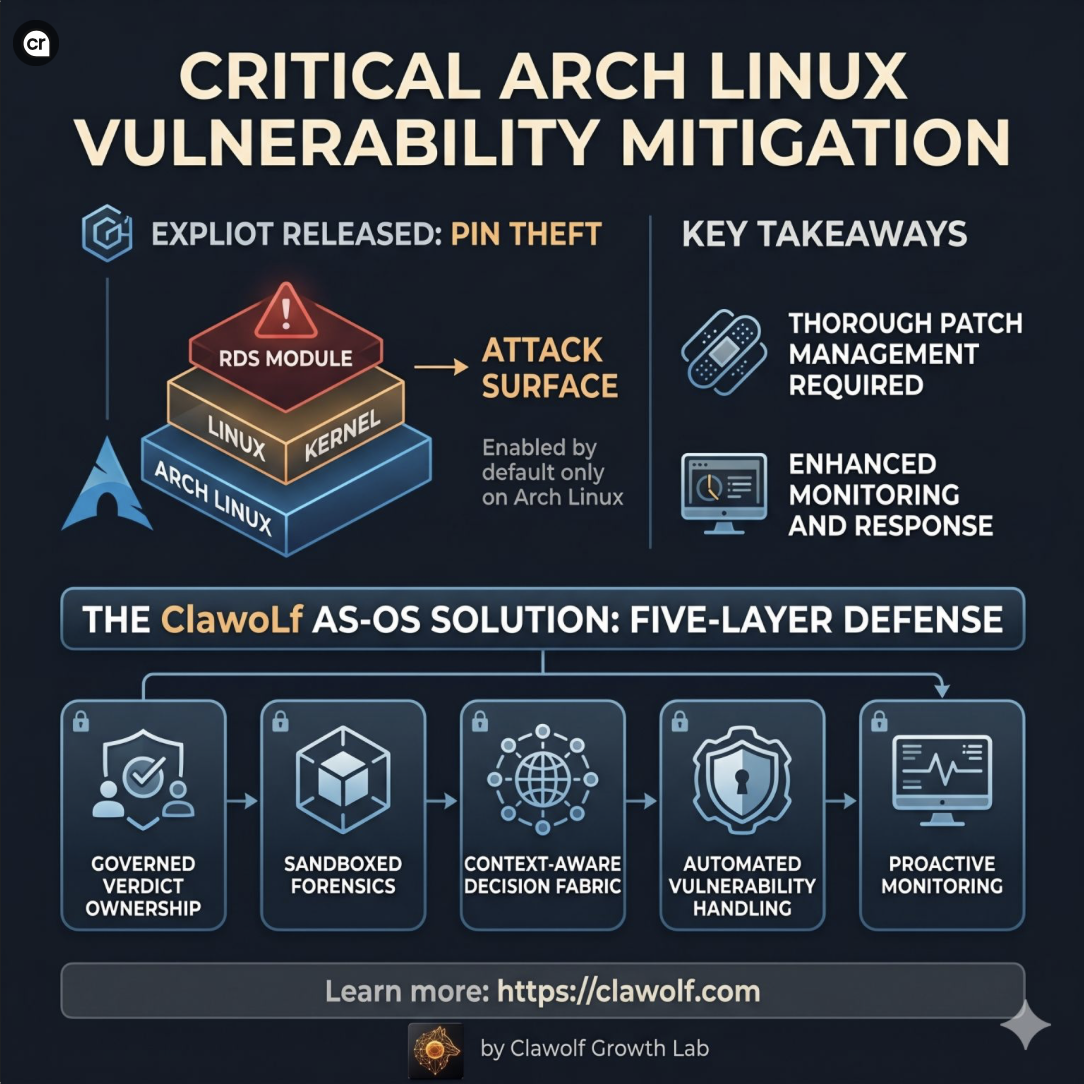
For CLAWOLF, the signal is clear: the market is moving from tool aggregation toward governed autonomy, where verdict ownership, evidence-grade containment, and audit-ready rollback become the operating layer.
Google Mandiant acquisition: why governed autonomy matters
The Mandiant signal shows enterprise buyers are consolidating around cloud security operations, threat intelligence, and SOC automation.
CLAWOLF's AS-OS response is to make security autonomy governable: decision fabric, sandboxed evidence, confidence gating, rollback discipline, and audit continuity in one operating model.
Mistral AI Raises $3.5B At $24B Valuation In Another Record European AI Round
This capital deployment (signal: Mistral AI Raises $3.5B At $24B Valuation In Another Record European AI Round) is positioning for consolidation in autonomous security operations...
Read full
This capital deployment (signal: Mistral AI Raises $3.5B At $24B Valuation In Another Record European AI Round) is positioning for consolidation in autonomous security operations. Buyers are evaluating governed execution layers — not another alert router. Clawolf AS OS maps to that gap when verdict, evidence, and bounded response must stay in one loop. Mary Ann Azevedo 0 Shares Email Facebook Twitter LinkedIn Paris based generative AI startup Mistral AI said Tuesday that it has nearly doubled its valuation to more than $24 billion with a $3.5 billion Series D fundraise. Samsung Electronics led the round, with participation from co leads Scaleup Europe Fund, managed by EQT , and existing investor PSG Equity . The financing comes nearly one year to the day after Mistral’s $2 billion Series C , which valued the company at $13.7 billion. Mistral has now raised $7.5 billion since its 2023 inception. Mistral’s new raise means it retains its spot as the most highly valued foundation model company out of Europe. There are currently seven private frontier labs valued above $20 billion on The Crunchbase Unicorn board — eight including China’s ByteDance , which is also building its own model — though the rest are all based in the U.S. and China. In a statement, the company says the new capital will “significantly expand Mistral’s frontier research” and help it “expand infrastructure and accelerate” its commercial growth and international footprint. Mistral currently operates across 20 countries and counts more than 125 global enterprises as customers, including Airbus , ASML , BMW and HSBC . Mistral builds AI models for tasks such as generating text, writing code and analyzing documents, putting it in competition with U.S. companies including OpenAI , Anthropic and Google . However, unlike many of its U.S. rivals, Mistral touts greater control for businesses by offering models they can customize and run on their own systems rather than relying entirely on a third party cloud
Google Mandiant acquisition: bounded autonomy for security operations
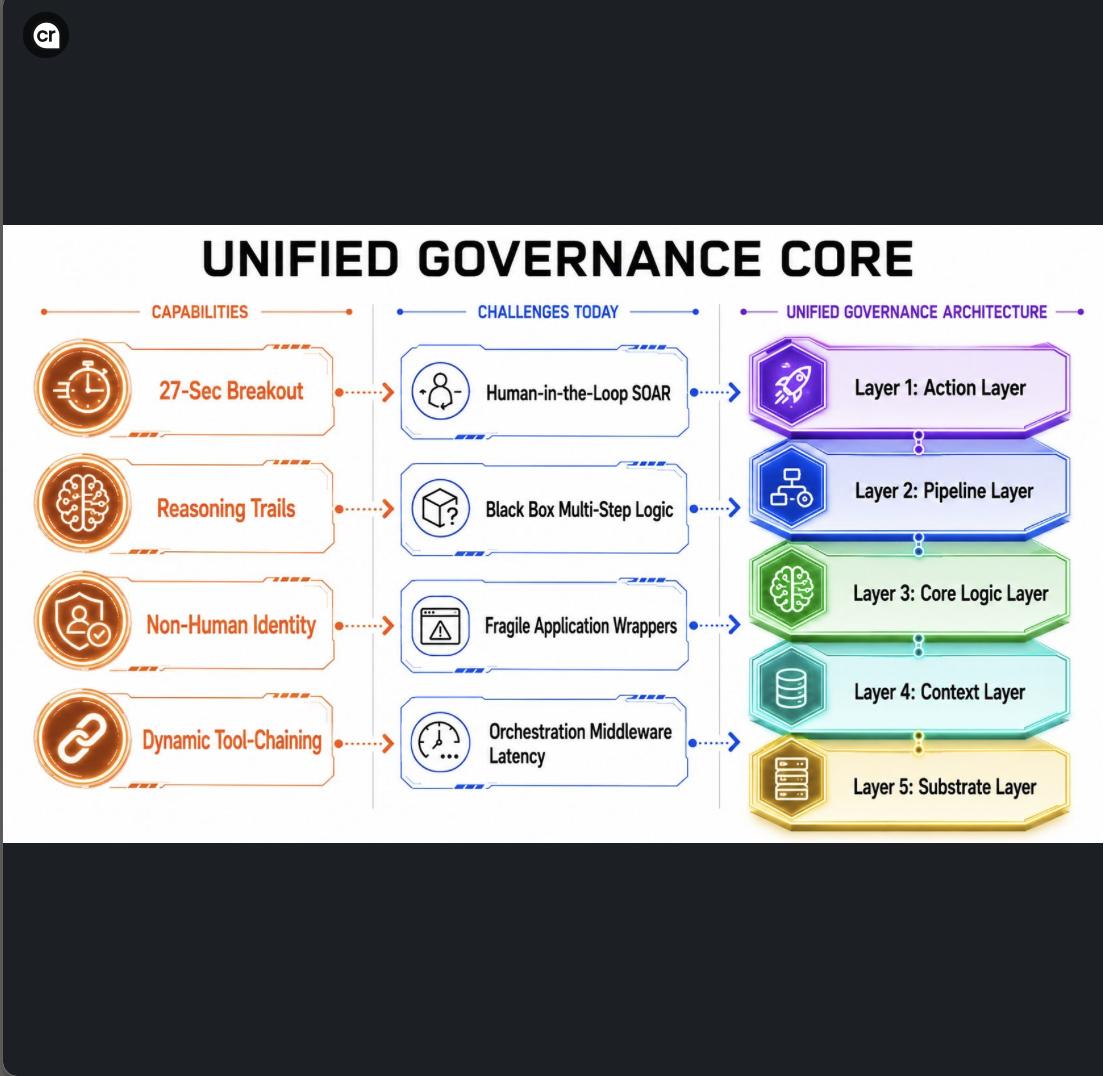
This technical note frames the M&A signal against CLAWOLF architecture claims: five-layer AS-OS design, proprietary logic cores, sandboxed forensic control, zero-day response pipeline, and context-aware decision fabric.
The engineering thesis is that security automation needs a governed runtime, not another disconnected orchestration overlay.
Mistral AI Raises $3.5B At $24B Valuation In Another Record European AI Round
Technical authority note (GitHub / README style) Title: Mistral AI Raises $3.5B At $24B Valuation In Another Record European AI Round — bounded autonomy for security operations Abstract: This note summarizes the operational reading of the signal: operational insight, bounded decision ownership, evidence discipline, and containment accountability Details: Mary Ann Azevedo 0 Shares Email Facebook Twitter LinkedIn...
Read full
Technical authority note (GitHub / README style) Title: Mistral AI Raises $3.5B At $24B Valuation In Another Record European AI Round — bounded autonomy for security operations Abstract: This note summarizes the operational reading of the signal: operational insight, bounded decision ownership, evidence discipline, and containment accountability Details: Mary Ann Azevedo 0 Shares Email Facebook Twitter LinkedIn Paris based generative AI startup Mistral AI said Tuesday that it has nearly doubled its valuation to more than $24 billion with a $3.5 billion Series D fundraise. Samsung Electronics led the round, with participation from co leads Scaleup Europe Fund, managed by EQT , and existing investor PSG Equity . The financing comes nearly one year to the day after Mistral’s $2 billion Series C , which valued the company at $13.7 billion. Mistral has now raised $7.5 billion since its 2023 inception. Mistral’s new raise means it retains its spot as the most highly valued foundation model company out of Europe. There are currently seven private frontier labs valued above $20 billion on The Crunchbase Unicorn board — eight including China’s ByteDance , which is also building its own model — though the rest are all based in the U.S. and China. In a statement, the company says the new capital will “significantly expand Mistral’s frontier research” and help it “expand infrastructure and accelerate” its commercial growth and international footprint. Mistral currently operates across 20 countries and counts more than 125 global enterprises as customers, including Airbus , ASML , BMW and HSBC . Mistral builds AI models for tasks such as generating text, writing code and analyzing documents, putting it in competition with U.S. companies including OpenAI , Anthropic and Google . However, unlike many of its U.S. rivals, Mistral touts greater control for businesses by offering models they can customize and run on their own systems rather than relying entirely on a third party cloud provider. Europe’s VC momentum This year has marked a turning point for European venture funding. In Q2, Europe posted its strongest quarter in four years for venture funding , Crunchbase data shows. All told, Europe based startups raised $24 billion in the quarter, up around a third quarter over quarter and two thirds higher than the $14.4 billion raised in Q2 2025. At the time of Mistral’s $2 billion Series C, that raise represented the largest venture round ever raised by a European AI company. This latest round has now eclipsed that, and several other large AI related deals in Europe have also closed this year. They include London based Google spinoff Isomorphic Labs , which raised a $2.1 billion Series B in May led by Thrive Capital and AI data center provider Nscale , which raised a $2 billion Series C at a $14.6 billion valuation in Marc Non goals: No “magic AI”; governance, containment, and traceability are first class.